I enjoyed Part III of Simon Schama’s ‘The Romantics and Us’ (BBC2
on Friday). It’s about nostalgia, the ‘songs of our
homeland’ and ancestry.
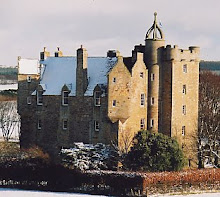
 Early on, Schama approaches Smailholm Tower with the words, “There
was a fear that authentic Scottish culture would dwindle away or simply
disappear” – echoing Sir Walter Scott’s stated reason for collecting local ballads: "to contribute to the history of my native country, the peculiar features of
whose manners and character are daily melting and dissolving into those of her
sister and ally”.
Early on, Schama approaches Smailholm Tower with the words, “There
was a fear that authentic Scottish culture would dwindle away or simply
disappear” – echoing Sir Walter Scott’s stated reason for collecting local ballads: "to contribute to the history of my native country, the peculiar features of
whose manners and character are daily melting and dissolving into those of her
sister and ally”.
How lucky we are, here in the Scottish Borders, that our own authentic culture
has not dissolved! It is preserved in Scott’s ‘Minstrelsy of the Scottish Border’,
in our stories of the reivers, in the myths and legends of these valleys. Also,
in our Common Ridings – authentic local festivals, each unique to its own town,
the sounds and smells unchanged in 300 years. Driven by Nostalgia, ‘exiles’ return
home for these celebrations each year.
Our culture has not dissolved, but it is also not celebrated!
Despite much of Highland heritage being preserved in Gaelic, stories of the
Highland clans resonate internationally in a way that our stories do not. And the
Borders is overlooked by most international tourists.
If we don’t know and celebrate our native culture, we can’t make
it interesting and attractive to others. VisitScotland research today suggests
that “visitors are expected to shift focus from ticking off large events and busy
city attractions for a gentler pace of travel”. That's us! Surely! But we must offer something more than fine landscapes if more people are to travel gently here.
The newly formed South of Scotland Destination Alliance (SSDA) is now responsible for the strategic marketing of the South of Scotland.
In my
view, their most important challenge is to present, loudly and consistently, a
picture of who we are. Arising from this beautiful landscape are ballads,
stories, music, paintings, history and festivals. But these don’t currently present
as a distinctive culture.
There are some disconnected spots of light: amongst them the
restoration of Gilnockie Tower as the Clan Armstrong Centre, the reprinting of
Wilson’s Tales of the Borders, The Hawick Reivers Festival, and The Twelve
Towers of Rule – a project to explain the purposeful burning of towers, mills
and abbeys in 1545. But we need a coordinated picture.
The SSDA has a steep road to climb. Scott is the towering
cultural figure of the Borders but there is no Scott Trail, linking his life
with the places that appear in his poems and novels. The ‘Borders Historic
Route’ slices through the Borders, but far from encouraging travellers to pause
and explore, it speeds them from Carlisle straight to Edinburgh - not even any
brown signs for Caerlenrig, The Borders Distillery or Melrose Abbey (to mention
just a few).

Nostalgia is the longing to go back and stay where you come
from. As a tour guide, specialising in ancestral tours, I regularly witnessed
the emotion of North Americans touching the stones of a ‘clan castle’, perhaps never even seen by their ancestors. But it’s as close as they will get
to a homeland; it's an anchorage and it’s powerful stuff. For those seeking out their Border roots,
the Hawick Heritage Hub is an exceptional facility, but its potential is poorly exploited. Few people know what’s in there, and rural B&Bs are often unaware of their
local history and its power to attract (and detain) ancestral tourists.
All power to the SSDA as it gears itself up. But please recognise
the enormous potential of Nostalgia, the ‘songs of our homeland’ and ancestry. If we do not sing loudly with the voice of our own people we are no more than a hotchpotch of interesting places and nice things to
do. The audio trails created by The Reivers Road are a step towards making our native culture more readily available, but much more is needed.
Simon Schama’s ‘Romantics and Us’ is available on iPlayer. I
recommend it.


 Posts
Posts